


Marco Stalla does not simply design spaces – he creates environments that make brands tangible and emotionally engaging.
Working at the intersection of architecture, interior design and visual storytelling, his approach combines creative direction with a strong understanding of how luxury brands communicate through physical space.
In today’s luxury landscape, retail environments are no longer just functional settings: they have become immersive experiences where architecture, light, materials and product presentation contribute to shaping a brand’s identity.
Throughout his career, Marco has developed retail concepts, visual merchandising strategies and brand environments for international luxury houses including Dolce & Gabbana, Yves Saint Laurent, Valentino and Roger Vivier, collaborating closely with creative directors and international teams.
His work moves between permanent retail spaces, temporary installations and experiential environments, always with the aim of creating spaces that feel coherent, memorable and emotionally resonant.
Against this backdrop, we had a chance to chat with Marco about space as language, about impact, density, and the future of physical experiences.
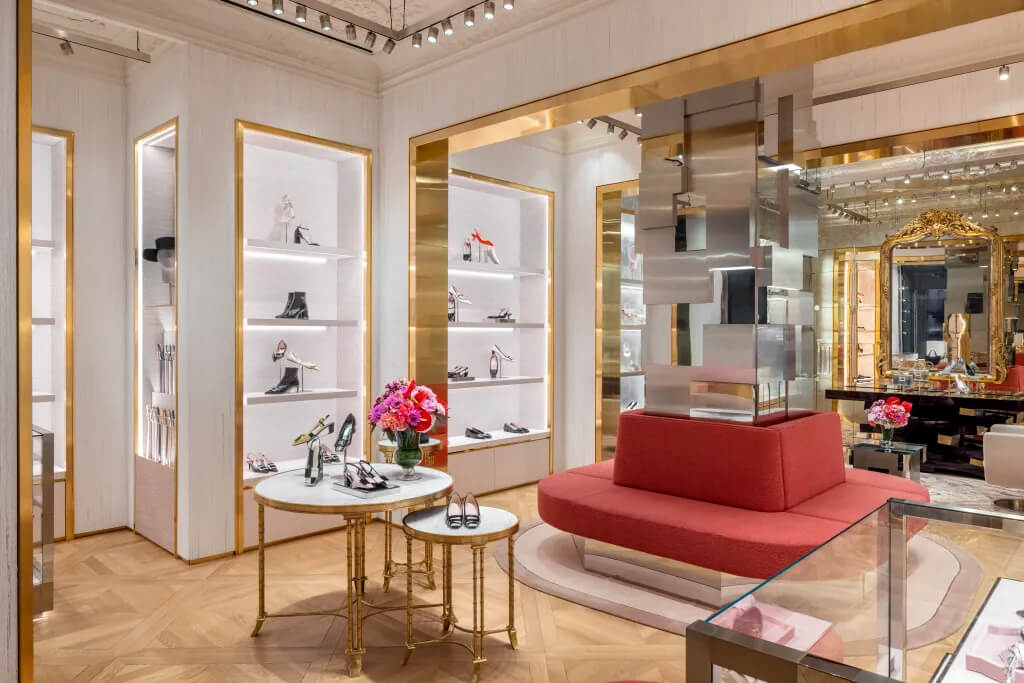
Roger Vivier store NYC
Marco, thank you so much for your time. Your most recent project for Roger Vivier on Madison Avenue in New York – following the Paris location – combines classical interior architecture with contemporary materials and precisely orchestrated lighting. The result is a sensorially charged spatial dramaturgy in which tradition and modernity intertwine.
How do you translate a brand’s DNA into space – without diluting it? And where does the freedom to evolve it begin?
Translating a brand’s DNA into space begins with understanding its emotional identity, not only its aesthetic codes.
Very often, a brand’s deepest values and visual identity originate from the founder’s vision and personal sensibility.
Every luxury brand has its own rhythm, proportions, atmosphere and way of communicating with people. My role is to transform those intangible qualities into a physical experience through materials, light, scale and spatial composition. At the same time, a brand cannot remain static. The challenge is to evolve its language while preserving coherence and authenticity. I believe evolution should feel natural – never forced.
How consistent does a design DNA remain as it moves from place to place? And when does it begin to change?
A strong design DNA should remain recognisable across different locations, but never completely identical.
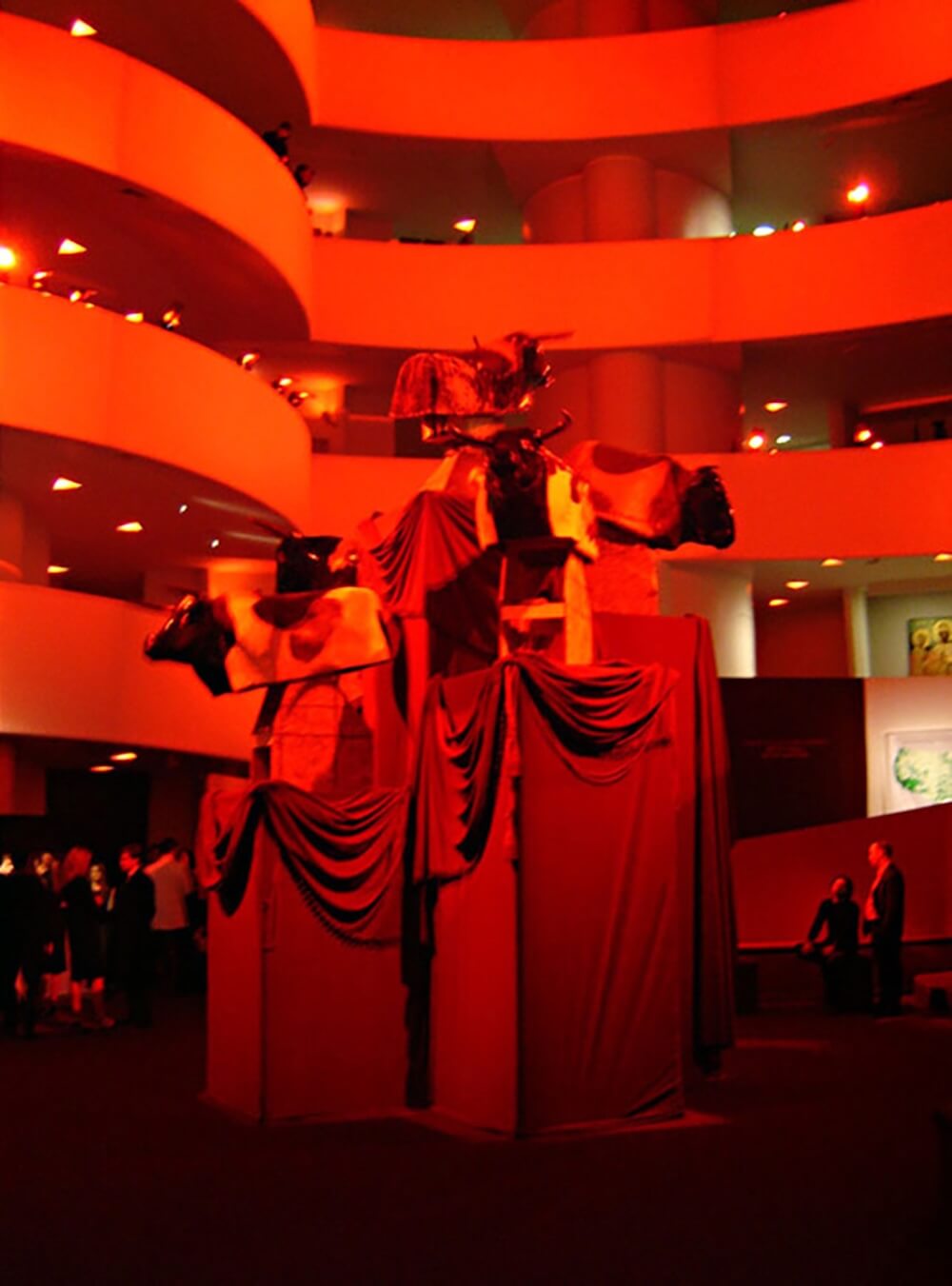
Yves Saint Laurent at the Guggenheim NYC
What role does cultural context play in spatial staging? And where is the line between adaptation and redefinition?
Cultural context always influences how people perceive space, luxury and even intimacy. The goal is not to redesign the brand for each market, but to subtly adapt the atmosphere and experience while maintaining a coherent identity. Clients should enter a store in different locations with a sense of comfort and familiarity, almost as if they were entering their own home in another part of the world.
The balance between consistency and adaptation is one of the most interesting aspects of global retail today.
You operate between temporary pop-ups and long-term retail concepts – formats with different speeds, yet the same narrative precision. How does your approach change when designing spaces with a limited lifespan?
Temporary spaces require a more immediate visual impact, but emotional depth remains essential.
In a pop-up or temporary installation, storytelling must happen very quickly. Every detail becomes more important because the experience has a shorter lifespan.
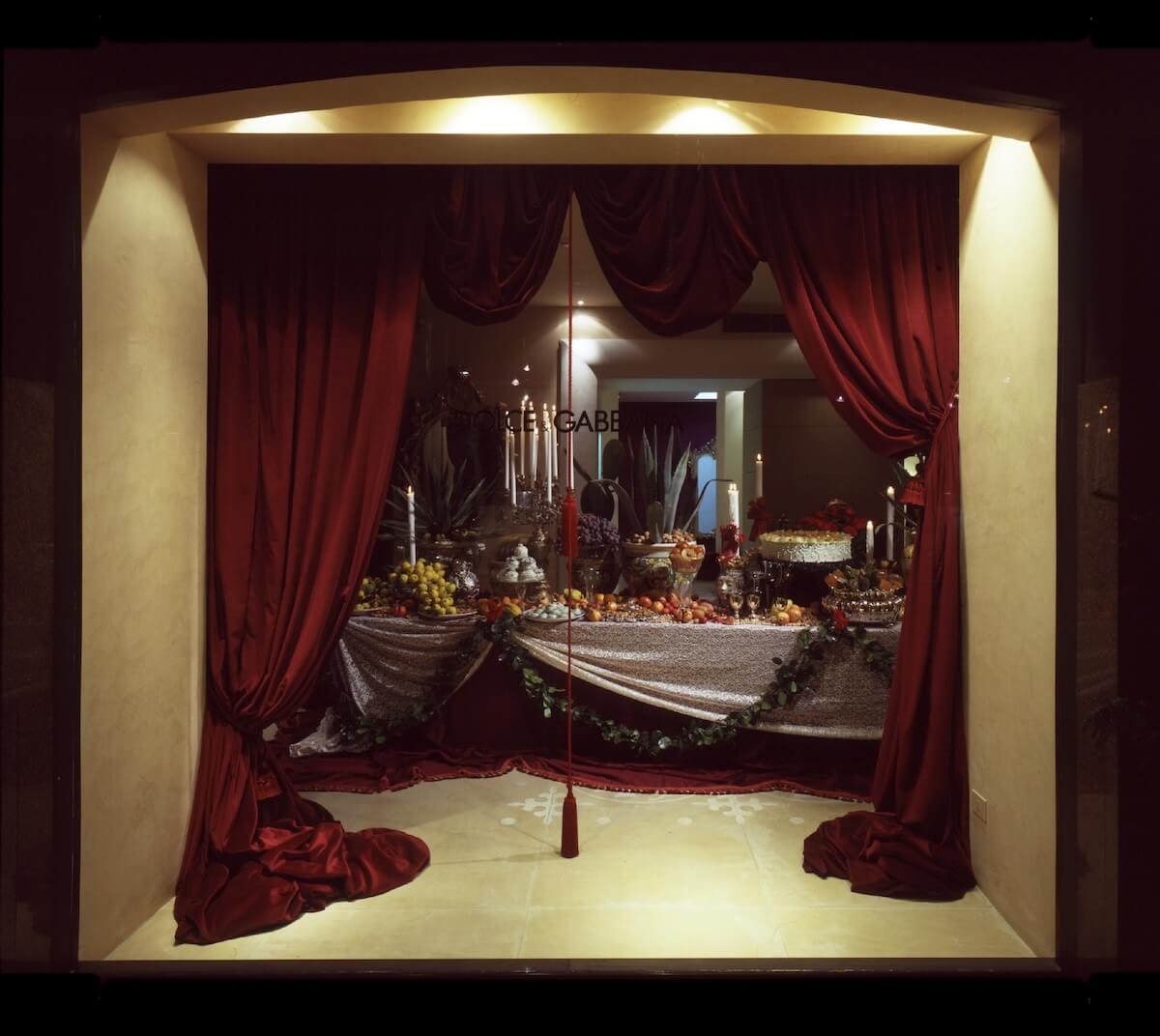
Dolce & Gabbana Christmas display
And how is emotional depth created within them?
I often see temporary projects as concentrated expressions of a brand’s identity – more instinctive, sometimes more experimental, but still emotionally coherent.
Your work brings together architecture, interior design, and brand communication into a clear visual language. Is there an overarching principle that connects all your projects – regardless of scale, location, or duration?
Regardless of scale or duration, I always try to create spaces that feel emotionally balanced and visually clear.
A successful space is one where architecture, product, light and movement work together naturally.
Do you intuitively sense when a space works?
Very often, you intuitively feel when a space works: people slow down, observe, interact differently. The atmosphere becomes almost instinctive.
I often try to design displays and spaces that customers would like to have at home: if they ask how they can get a piece of the pop up or of the window display it’s a success.
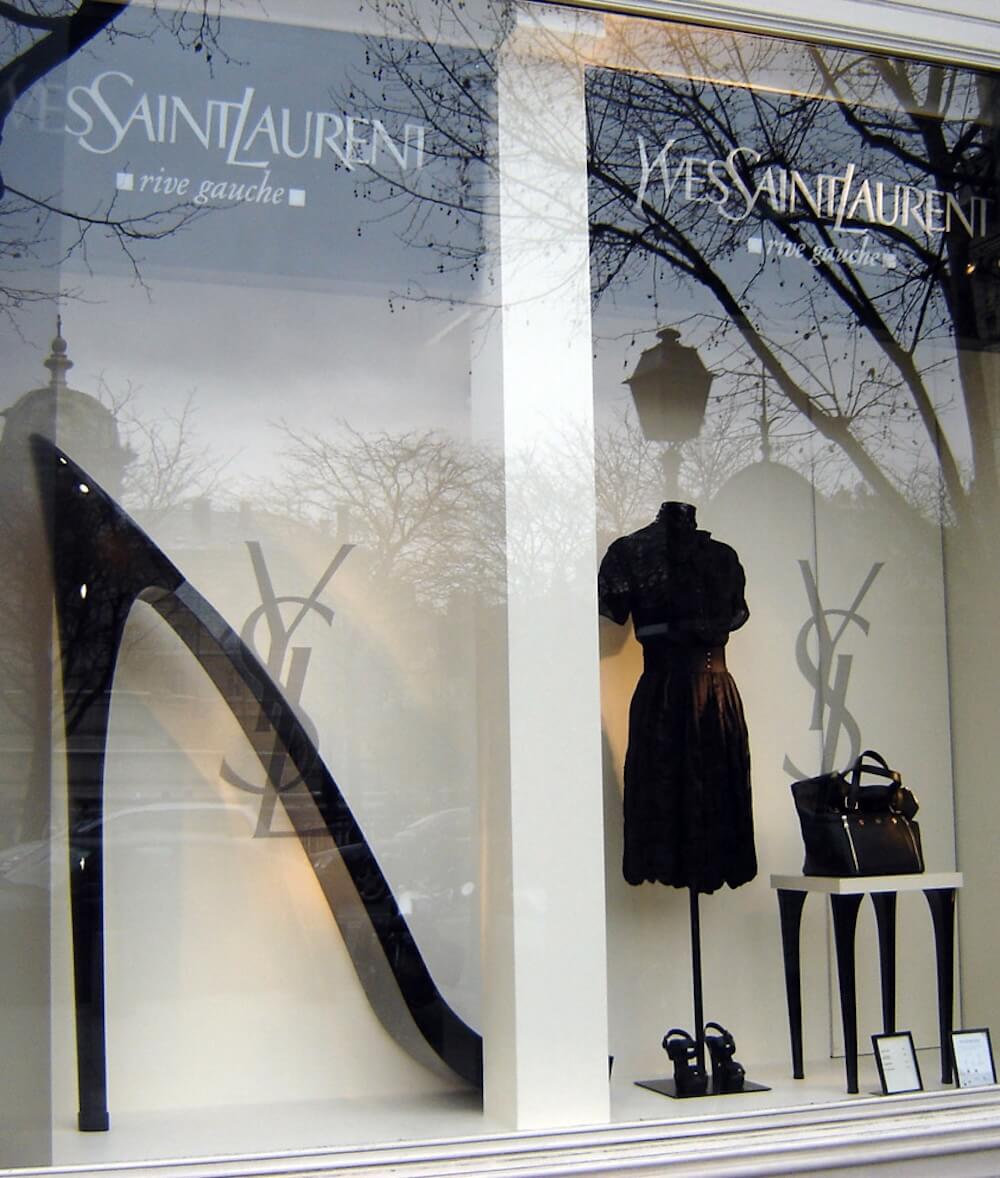
Yves Saint Laurent window display
In an increasingly digital world, the desire for physically tangible spaces is growing. What role will real space play in the future of visual merchandising? Will it become a counterpoint to digital experience – or an extension of it?
I believe physical space will become even more important in the future of luxury.
As our lives become increasingly digital, people seek authentic sensory experiences – materials, light, proportions, and human interaction.
And how is technology changing our perception and design of space?
Technology and digital tools can enhance the retail experience, but they should support the emotional quality of space rather than replace it.The future is not physical versus digital, but a more intelligent integration of both.
In an increasingly globalised world, nonverbal communication is shaped by cultural sensitivity. Images convey values – from religious art to the contemporary luxury brand. Roger Vivier is internationally present, including regions such as the Middle East. When we look at your work for Roger Vivier, is your aim to reinterpret timeless values?
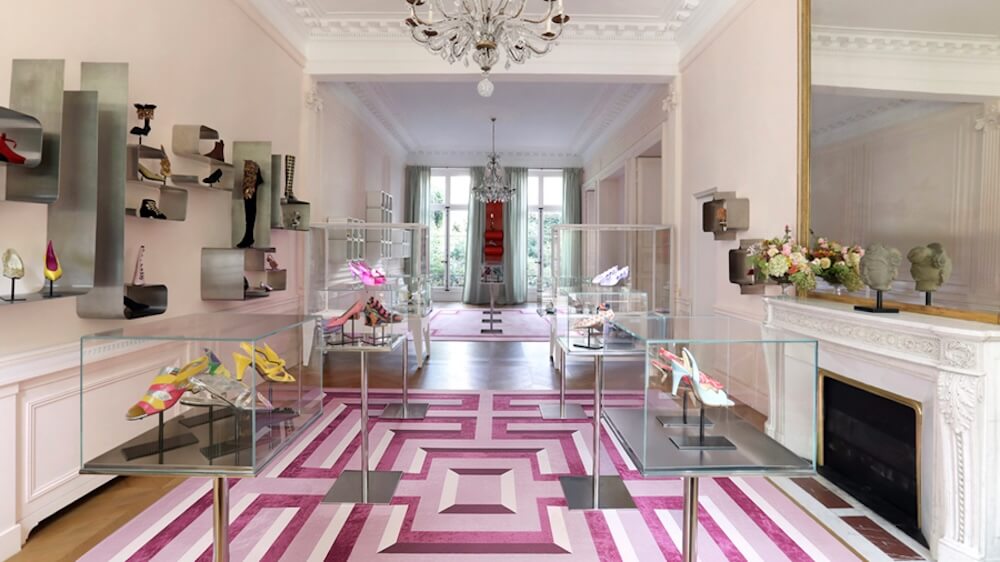
Roger Vivier Hôtel Particulier Paris
In my work for Roger Vivier and other luxury brands, I am interested in reinterpreting timeless values – elegance, craftsmanship, sophistication – while also creating contemporary experiences that feel relevant to today’s audience.
Do you see visual design as a means of shaping new aesthetic ideals?
Visual design for luxury should evolve without losing the cultural depth and identity of the brand.
Finally, you shape brands not only through spaces, but also through exceptional events. Looking back, which experience has stayed with you most – and for which client was that moment created?
I loved working for Dolce & Gabbana, and one experience that remains particularly vivid in my memory is an event for Madonna in Rome. At the time, it felt extraordinary to me: Dolce & Gabbana was the brand I had always dreamed of working for, and meeting Madonna in person during that period made the experience even more unforgettable.
Everything came together in a single evening – fashion, music, architecture and emotion – inside one of Rome’s beautiful historic buildings. Looking back, it was one of those rare moments where professional ambition and personal emotion unexpectedly intersect.
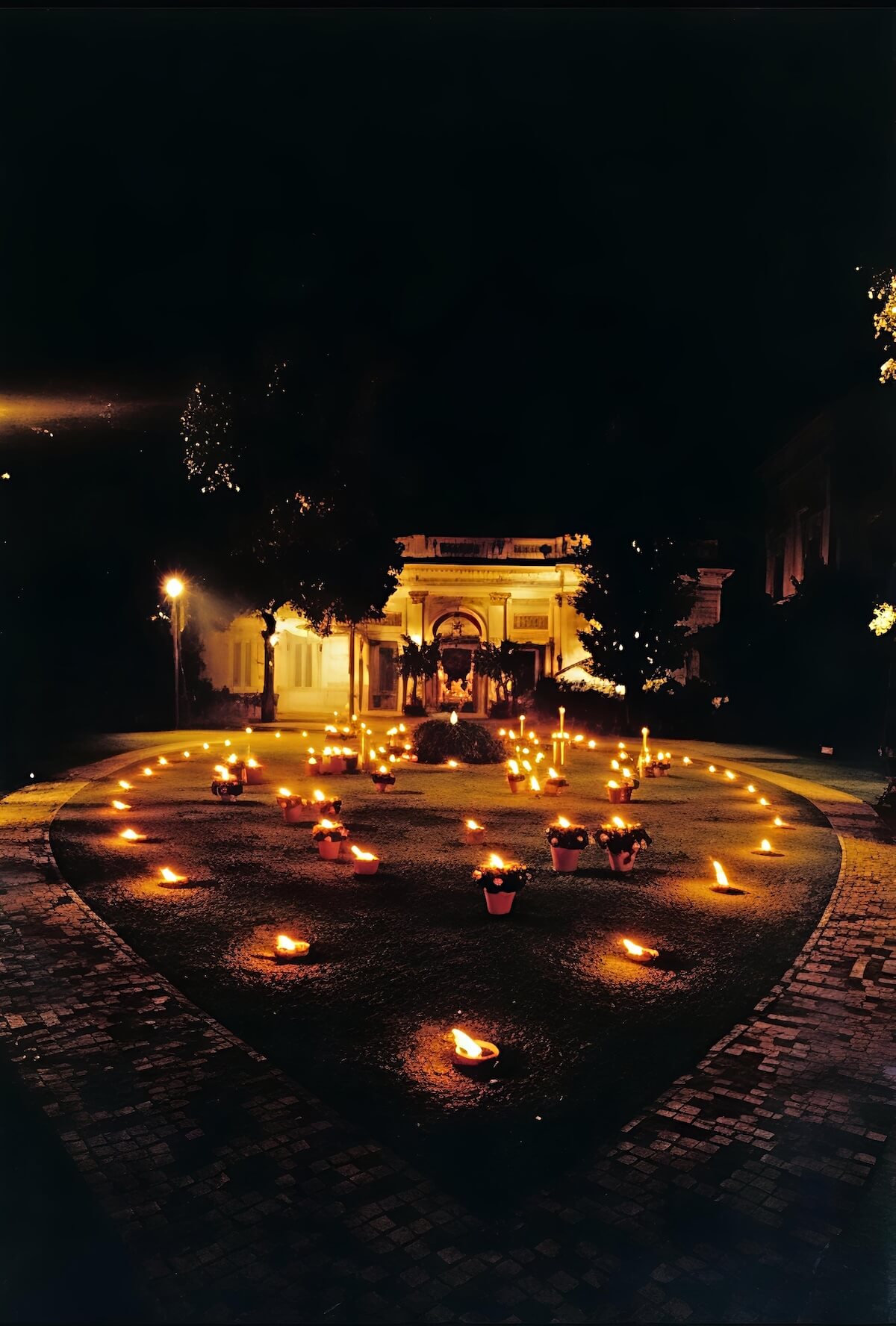
Dolce & Gabbana event for Madonna in Rome
Marco, it was a real pleasure to talk with you and thank you again for giving us the opportunity to do so. You speak with a naturalness that makes the complexity of your work appear almost effortless. Your work feels less like a retrospective than an ongoing dialogue between past, present, and future.
We look forward to the next spaces that you will create.

PHOTO CREDITS
- All photos courtesy and used with the express permission of Marco Stalla








Leave a comment