


Rajasthan is the guest of honour at the fourth edition of the French-Indian festival in Nice this October.
In French, the word Inde sounds almost like “end”. Happy Inde, then, carries a clever bilingual wordplay in its name: an Indian festival with the promise of a happy end. In Nice this October, that acquires a broader meaning. As France and India celebrate their Year of Innovation, the city is turning to culture, colour, movement, music, and hospitality as one of the most persuasive ways for two countries to meet. The fourth Happy Inde festival, taking place from 3 to 10 October at various locations across the city, puts the spotlight on Rajasthan, the north-western Indian state of forts, palaces, desert landscapes, extraordinary textiles and some of the country’s most distinctive musical and dance traditions.
The India-France Year of Innovation (Année franco-indienne de l’Innovation) 2026 forms part of the two countries’ renewed “Special Global Strategic Partnership”, inaugurated jointly by Emmanuel Macron and Narendra Modi in Mumbai in February. Its programme brings together research, business, technology, sustainable development, health, and education. But it reaches well beyond laboratories and start-ups: the cultural and creative industries are also showcased. And they have a place at the centre of that project, rather than at its margins.
When picturing typical Indian scenes, most people think of the palaces and maharajas that Rajasthan is famous for, but its cultural life is considerably more animated than that familiar postcard. Alongside its architectural heritage, the region is known for folk music, miniature painting, block printing, bandhani tie-dye, blue pottery, jewellery, puppetry and an exuberant repertoire of dance.
Its music carries stories of love, devotion, heroism and travel, preserved through oral traditions and generations of professional and community-based musicians. Its dances include Ghoomar, Bhavai and Kalbelia, while Jaipur remains one of the historic centres of Kathak, the great north Indian classical dance form. Kalbelia songs and dances were inscribed on UNESCO’s Representative List of the Intangible Cultural Heritage of Humanity in 2010.
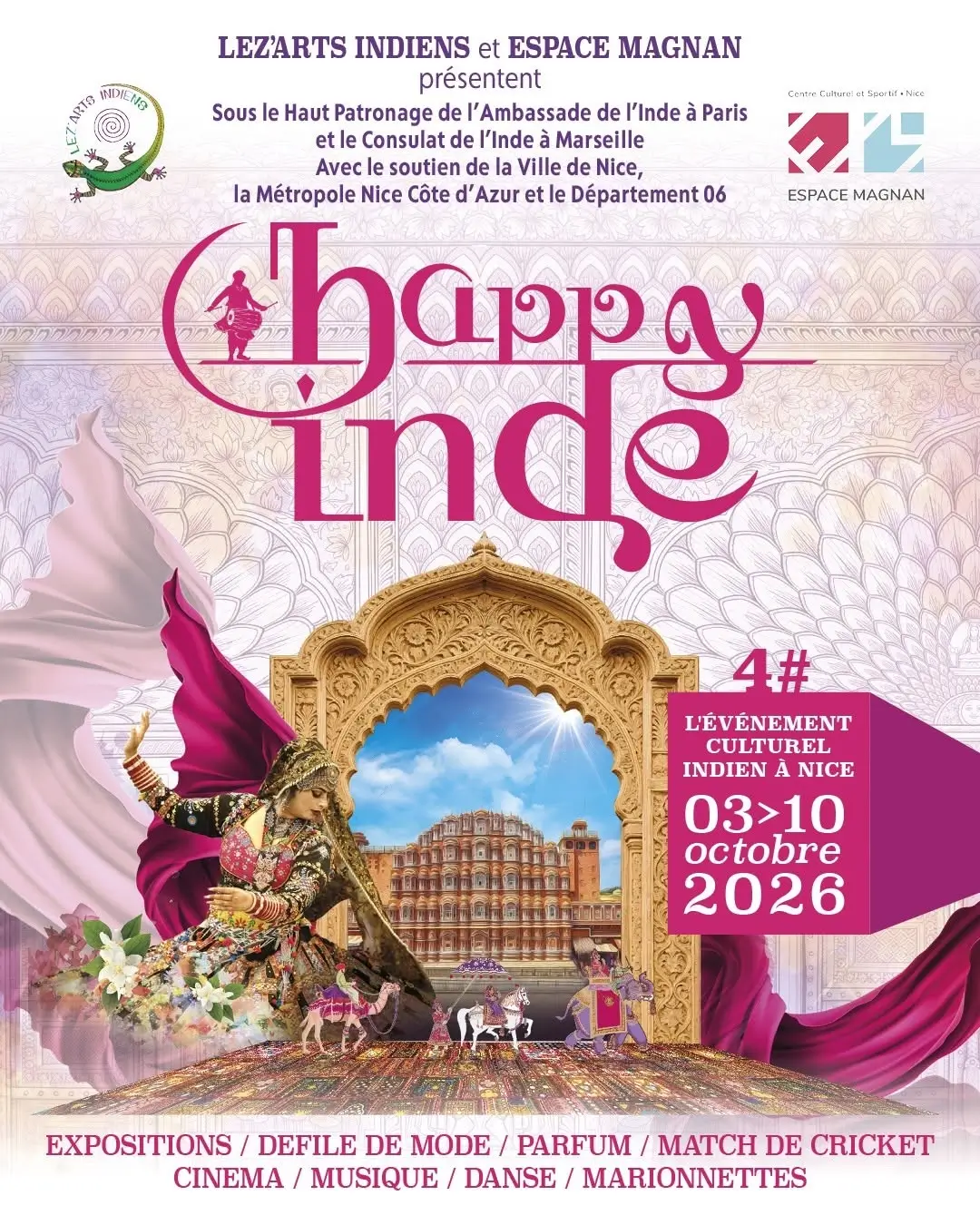
The Highlights of a Colourful Week
Few festivals feature such a level of quality and variety in the space of just one week. Founder and organizer Sabrina Arusam made sure that there truly is an event for every taste and interest. Among the rich offering, some events, primi inter pares:
The festival opens at the Stockfish on 3 October, emceed by Sunayna Bhargava, who embodies both science and art: in addition to her research and teaching activities as an astrophysicist at L’Observatoire de la Côte d’Azur, she is also a musician, kathak dancer and poetess. A performance by Les Gypsies du Rajasthan sets the tone for a programme in which Rajasthan’s courtly associations meet the energy of its folk traditions.
Who says India, says cricket. And cricket joins the programme for the first time on 4 October, with a match at Stade Charles Ehrmann. The sport is so deeply woven into Indian life that it offers a route into the country as immediate as music or food. It also gives people the opportunity to connect directly, with a different kind of shared language.
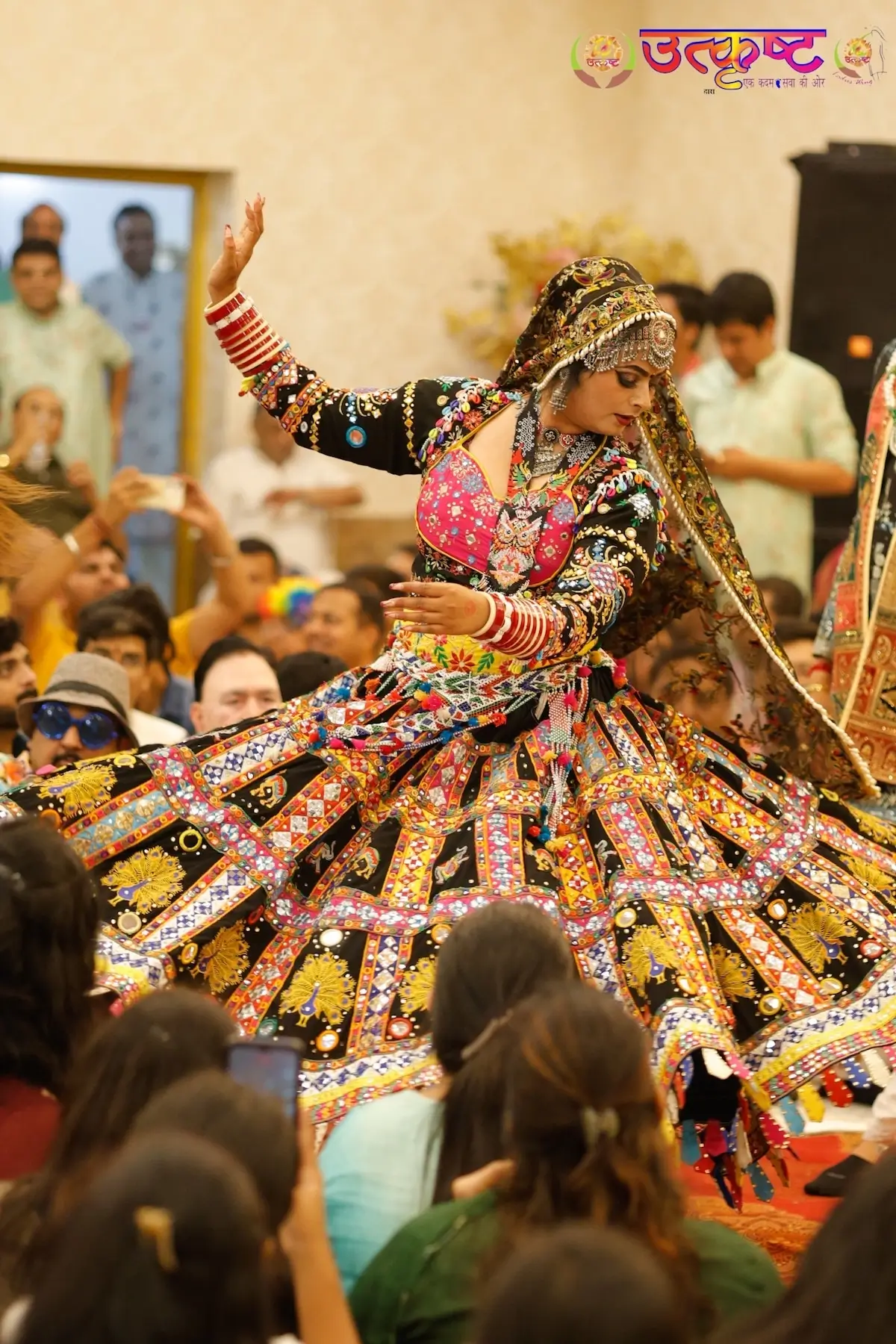
On 7 October, Musée des Arts Asiatiques hosts Jaipuri dancer and choreographer Senu Sapera’s workshop in the sinuous folk dance of Rajasthan’s Kalbelia community. Traditionally associated with snake handling, women dancers evoke the movements of a serpent in flowing, mirror- and silver-embroidered skirts.
Rajasthan’s textile traditions receive their own spotlight on 9 October with “Royal Threads of India”, a fashion show at the Negresco Hotel. Bandhani and leheriya tie-dye, embroidery, mirror work, block printing and Kota Doria weaving all belong to the region’s rich textile vocabulary. On a catwalk, these techniques can move from the language of heritage into that of contemporary design.
The exhibition “Kalligraphie, dialogues encrés entre l’Inde et la France” (5-10 October at Espace Magnan) extends the conversation into visual art. Its title suggests a meeting of hands as much as of countries: ink, line, script and gesture becoming a shared space between India and France.
The festival closes at Espace Magnan on 10 October. Between the opening concert and the final evening, its programme moves through different doorways into India; together they create a portrait with more than one centre.
Happy Inde was founded in 2023, and each edition has adopted a slightly different perspective on India. The 2024 programme centred on Rabindranath Tagore; the 2025 edition explored Kerala, including Kathakali, Kalarippayatt and Mohiniyattam. India arrives not as a single, polished image but as a series of regions, histories, artistic practices, and contemporary voices.
Nice has played a central role throughout this yearlong French-Indian partnership programme. It was here, in June 2026, that President Macron welcomed India’s Prime Minister Modi to inaugurate the first Bharat Innovate 2026 event outside the South-Asian sub-continent, highlighting the growing technological and industrial partnership between the two nations.
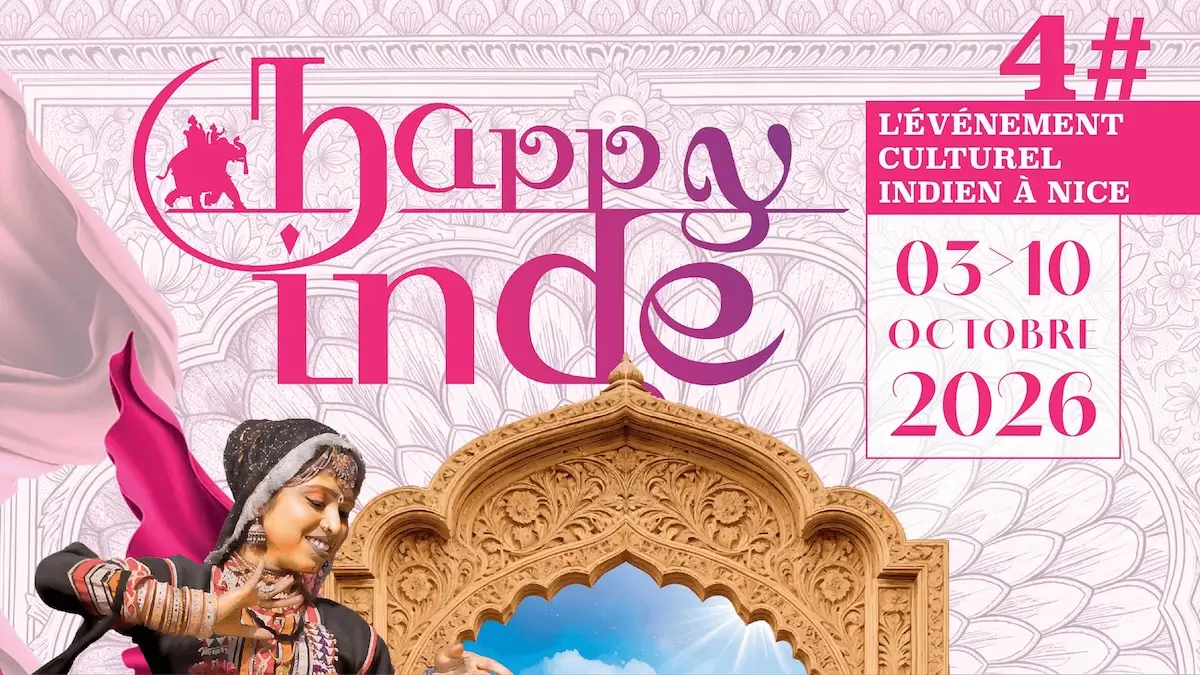
And that is precisely where Happy Inde meets the larger ambition of the Year of Innovation. International partnerships are built through agreements and institutions, but they become tangible through people: artists who perform and teach, audiences who participate, and traditions that continue to travel. And perhaps that is the festival’s happiest idea of all. In Nice, India and France meet through Rajasthan, and the result is a happy Inde, a happy end and a promising beginning.
Visit this link for the full programme, venues, and ticket information.

PHOTO CREDITS
- All photos and images courtesy Happy Inde Festival / Métropole Nice Côte d’Azur
Advertisement








Leave a comment