


In our new monthly series, locals lift the veil on the lesser-known and often surprising sides of the Riviera towns they live in. We start with beautiful Mougins.
When asked about Mougins, most people will name Picasso. Some may mention the jasmine production. Considerably fewer will say “Guinness!” The Irish brewing and banking dynasty did actually, for a time, own a house in the village and was part of the wider network of international society that gave the region much of its twentieth-century character. That is only one of the more unexpected details in a much older and more layered history, though.
Mougins, like so many other towns, is best told through the eyes and words of a local. We sat down with Alain B., a recently retired English and Spanish teacher, who gave us his version of life in the town he has called home for most of his life. A discreet and unassuming man, he prefers to keep out of the spotlight, but he certainly can tell a fascinating story.
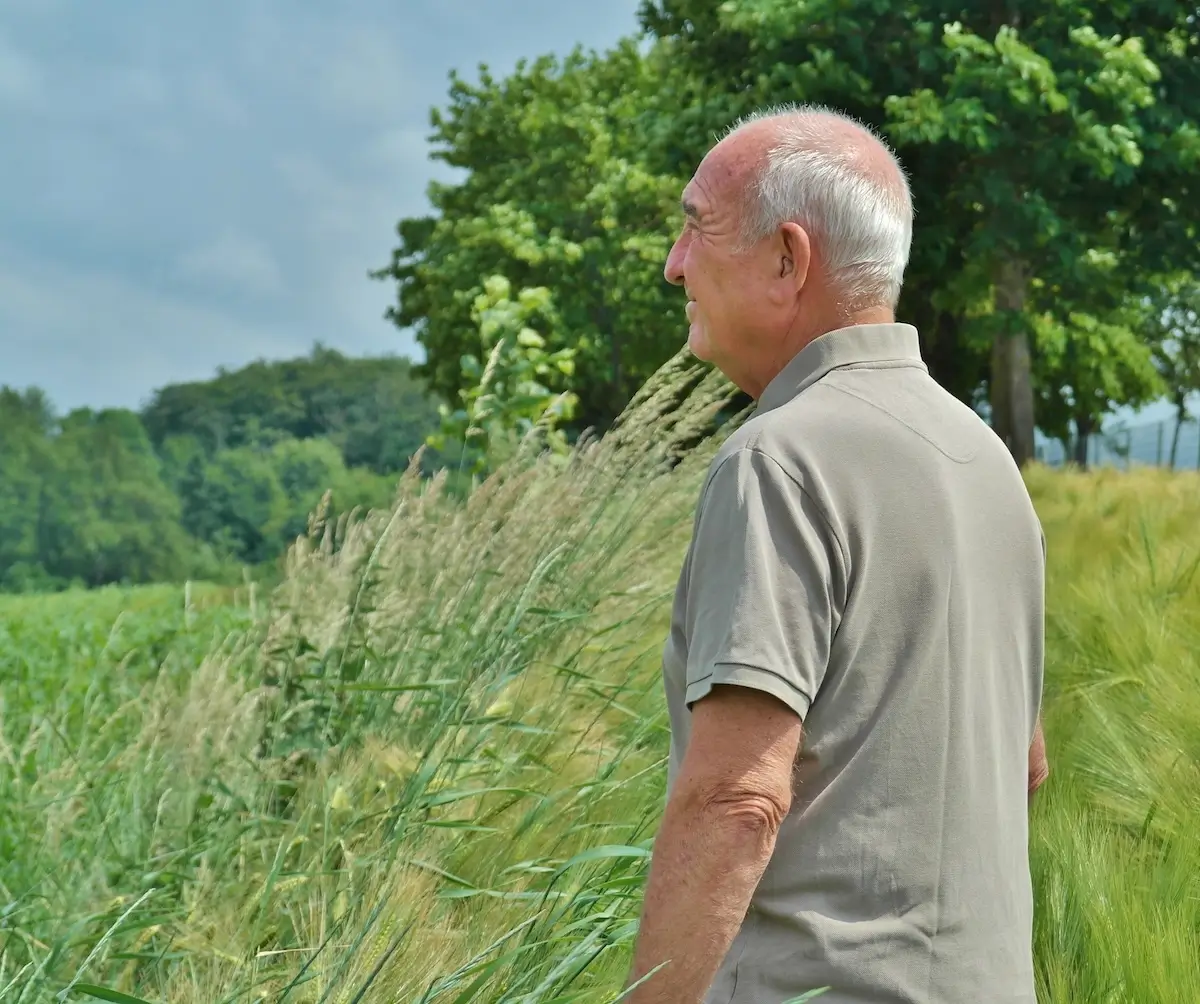
Photo of Alain B, courtesy self
What do the locals think of when they talk about Mougins?
We don’t think about Picasso first. We talk about mundane business, like local politics or the nonstop heatwaves, or how the village holds its breath when the tourists think they own the place. Picasso belongs to the plaques and the postcards; the rest belongs to us.
How would you tell someone to actually experience the village?
Mougins is best experienced by using your senses. If you want the real Mougins, start early in the morning, at the edge of the old village where the road narrows. Walk slowly. Let your eyes adjust to the first, bluish sunlight and the view of the distant bay. Run your fingers along the walls and feel how smooth their weathered stones are. Listen to the birdsong, it comes from everywhere.
But then, notice the scent. Jasmine doesn’t just grow here, it invades every nook and cranny. In summer, the whole upper village smells like a perfumer’s lab. You can follow it through the alleys better than any signpost. It leads you past doors painted the colour of old shutters, past pots of geraniums that have outlived three owners, and the little fountains that still run.
I am not idealising this town but the private spectacle Mougins rewards the locals with every morning while the tourists are still busy compiling their daily schedules, is quite amazing. If only they knew they’d be so much better served if they just allowed themselves to drift.
The “village jardin” label – is that something locals recognise in themselves?
We were a “village jardin” before the tourist office put it on the signs. Half the commune is green, but it doesn’t announce itself. It hides behind walls, in courtyards, up steps that seem to go nowhere. You learn to read the gaps. See that sliver of shade between the two houses over there? There is a private garden well protected from prying eyes. This burst of cypress over a wall means someone is pruning and caring for it. In spring, the wisteria goes mad and the whole place looks as if it’s trying to escape its own stones. Even in winter, the mimosas remind you that beauty has no season here.
The fountains keep coming up. They seem to be about more than water.
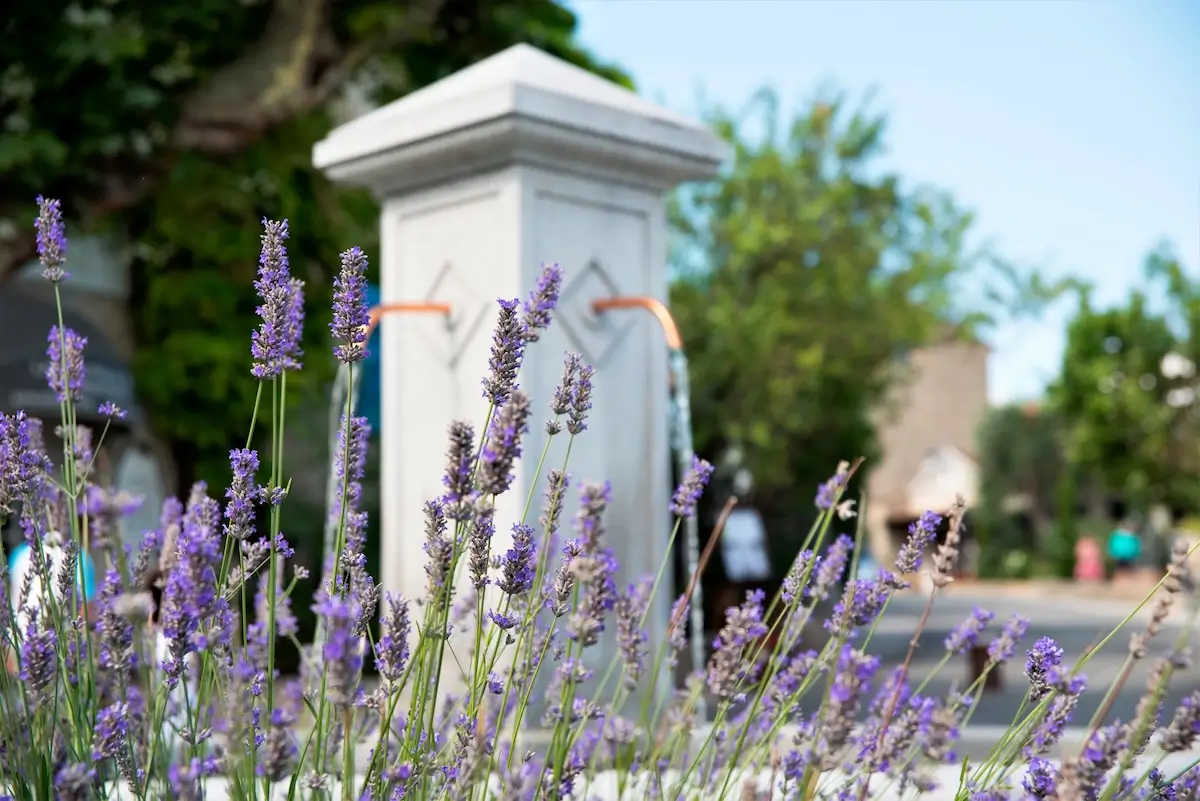
Photo © Ville de Mougins
The fountains have heard all of the town’s secrets. They are old meeting points, the gossip exchange, where you learned who was ill, who had come back from the war, who was pretending not to be in love. Some still work and others have been turned into decorations. But if you stand by one long enough, you hear the same thing you always heard: water running, voices low, time measured in buckets and basins rather than minutes. There was a time when disputes over water could split families. Now the disputes are over parking and whether a restaurant can put one more table on the square. Progress, they call it.
What has brought the artists here?
Artists came because the light was good and the rents were low once upon a time. Because Grasse was too busy and Cannes too loud, and you could work here and no one asked you to explain yourself at the café. Some stayed. Some left famous; others yet left under the cloak of night with their canvases rolled under their arms and their debts settled in instalments.
The village absorbed them all. You can still feel it in certain streets, where the air seems charged with a kind of creative static. You see a gate and think: someone painted something important behind there. You pass a window and wonder how many portraits looked out of it before they went to hang in museums you’ll never visit.
But art here goes beyond what hangs in galleries. We see art in how a baker arranges his tarts, or a woman ties her scarf, or a gardener coaxes a rose from poor soil. I call it “the small, stubborn acts of making something better than it needs to be”.
And the food? Mougins has a serious culinary reputation.
It is no accident that Mougins drew serious cooks. We are lucky enough to sit at the centre of an exceptional network of producers: olive growers, fishermen coming into Antibes and Cannes before dawn, market gardeners on the plain, or cheese makers further up in the hills. We even have our own local winery but that is a secret we guard jealously (chuckles).
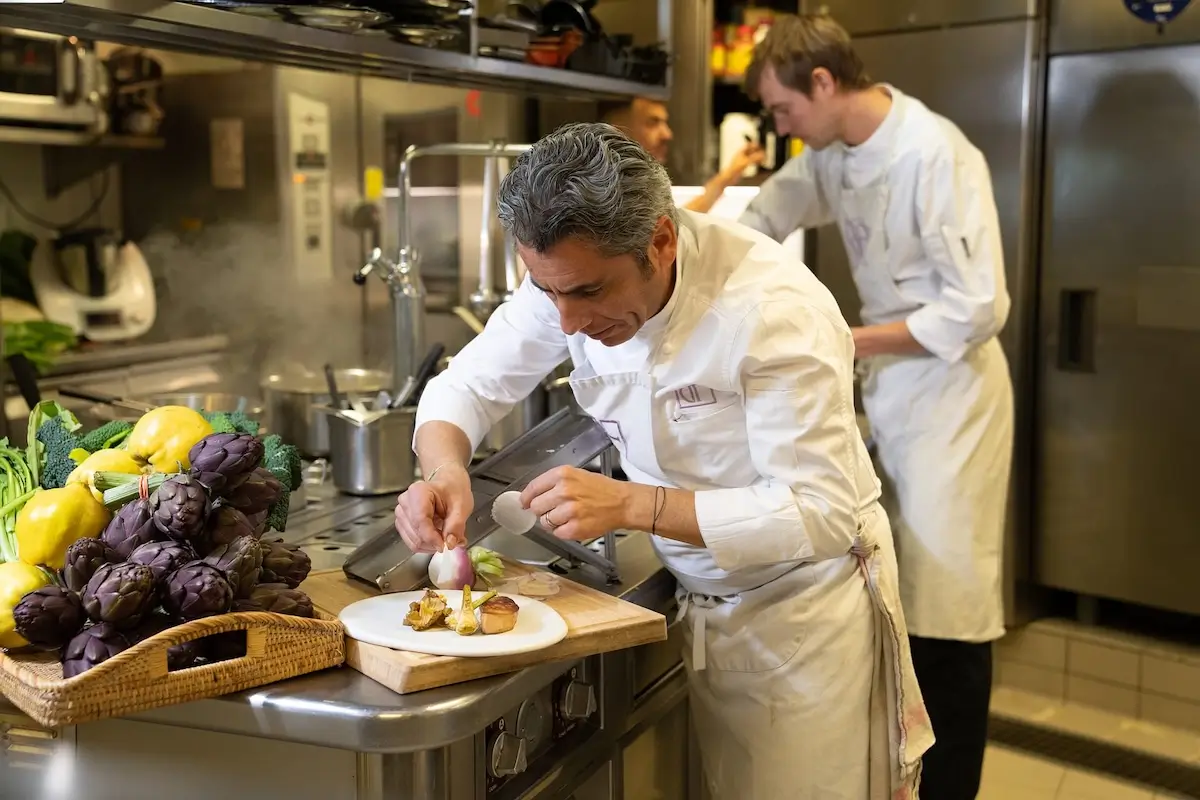
Chef Denis Fetisson – photo © A Hildenberg – Mougins tourisme
The great chef Roger Vergé understood this proximity when he opened Le Moulin de Mougins in 1969, and he built his reputation, and eventually his stars, on it. He only had to step outside his kitchen door to be inspired, then use a handful of local ingredients, and bim! A plate of magic! When the other chefs followed, the village had, for a time, a concentration of high-end restaurants out of all proportion to its size. That made the food world pay attention. But every self-respecting cook knew the real work happened not in the kitchen but in the early morning conversations at the market, with the people who grew and caught and raised things. That relationship is still here.
Who else came, beyond artists and chefs?
Mougins has always been a place of sanctuary, not just for painters and writers but for anyone who needed a corner of the world where they could breathe without being asked to perform. We are good at giving others space. Medical stories, for instance – though no one puts them on the brochures. In the early 20th century, people came here to recover. The air was thought to cure things that doctors in Paris couldn’t name.
It doesn’t matter whether you paint or play golf like a legend, or if you are rich or famous. What impresses us locals more is if you know which baker’s pain de campagne lasts two days longer, or which butcher still cuts for a daube. This is the knowledge that matters. We like things done well here.
What does your most famous tourist attraction, the Chapelle Notre-Dame-de-Vie, mean for the Mouginois?
Well, first, everyone says Notre-Dame-de-Vie was built in the 16th century, which is only partly true. It was reshaped then, but its roots go much further back: parts of the building still date from the Middle Ages, like the entire old part of town. And until 1730, it was a sanctuaire à répit where stillborn children were brought for posthumous baptism and then buried.
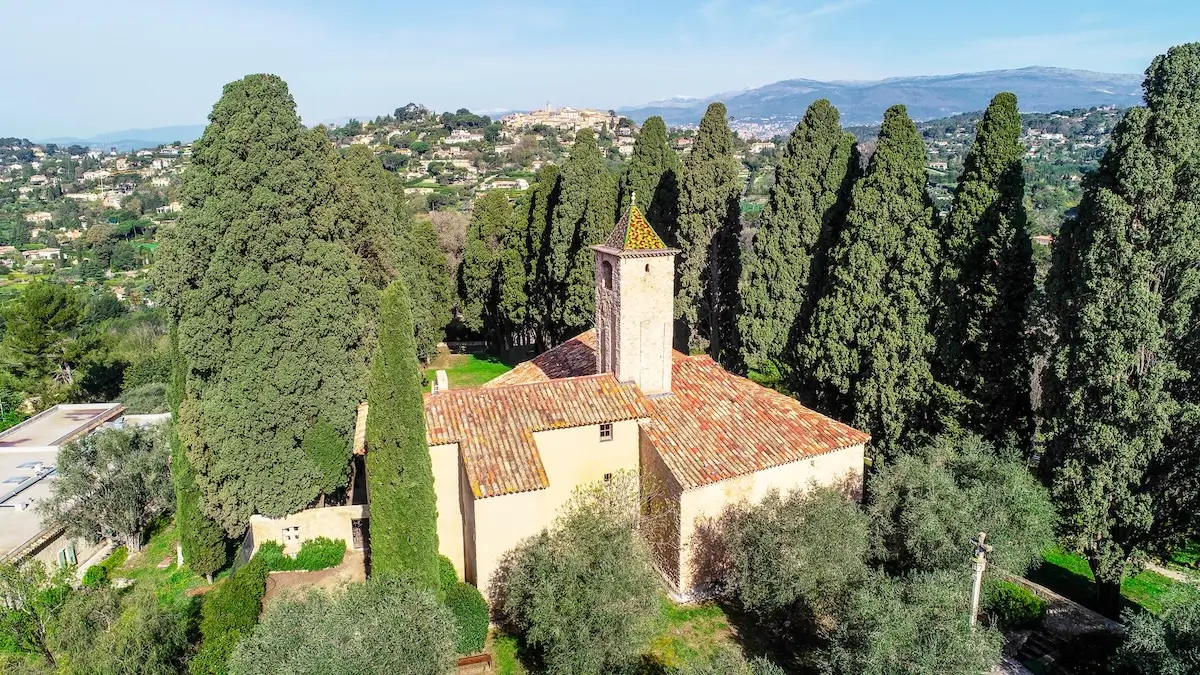
Chapelle Notre-Dame-de-Vie de Mougins; photo © Ville de Mougins
The chapel has stood below the village for so long that it feels like part of the landscape, like one of those places people stop noticing until a visitor asks about it. It has been a place of worship, certainly, but also a witness to the comings and goings of the people around it: local families, passing pilgrims, foreign residents and, eventually, the Guinnesses and Picasso. Bridget Guinness is buried there. Her family owned the adjacent property, Mas Notre-Dame-de-Vie. Picasso later purchased that house, which rather neatly joins two of Mougins’ best-known names by a few yards of old stone.
But there is another 11th century parish church, with a different kind of legacy: Saint-Jacques-le-Majeur, in the village centre, was where desperate mothers could leave their newborns and infants they could not care for. This may be less glamorous than the Guinness/Picasso association, but for us, it is just as meaningful.
Mougins’s Guinness connection surprises people, does it not?
Yes, indeed. But the Irish brewers are part of Mougins’ story, too, and it is more significant than is sometimes acknowledged.
People of a certain age in the village still know what I mean when they talk about them: for a period in the 1900s, the family became genuinely local in the way that only comes with time and intention. They were socialites in the proper sense of the word: people who made it their business to bring others together, connecting artists with buyers, sponsors with intellectuals, the creative world with the moneyed one. They received guests like Jean Cocteau and Sir Winston Churchill. In a region that ran on exactly those kinds of social interactions, their benevolence and generosity contributed greatly to making the French Riviera an artistic powerhouse in the first half of the 20th century.
What do visitors tend to miss?
If you wander far enough, you find the places where the village shows its age. The real age, not the polished kind on heritage signs: cracks in the stone, the tiles that have slipped, or the walls repaired so many times they are more patch than original. To us, these are not defects but the record of every storm and summer, and every decision to stay rather than leave. We live in a world today that values the new above all, but Mougins wears its age with pride. It does not pretend to be anything else.
There’s a mythology around Mougins: the minotaurs…
Every wall here carries a myth, or a legend, or a story. Minotaurs and other creatures have been known to appear in exhibitions, brought to life by artists who understand that every town has its monsters, visible or not. First came Picasso, then others, and most recently came Beth Carter, a British sculptor whose works are exhibited all over town until 1 November 2026. They all added something to the enduring myth of Mougins and its minotaurs.
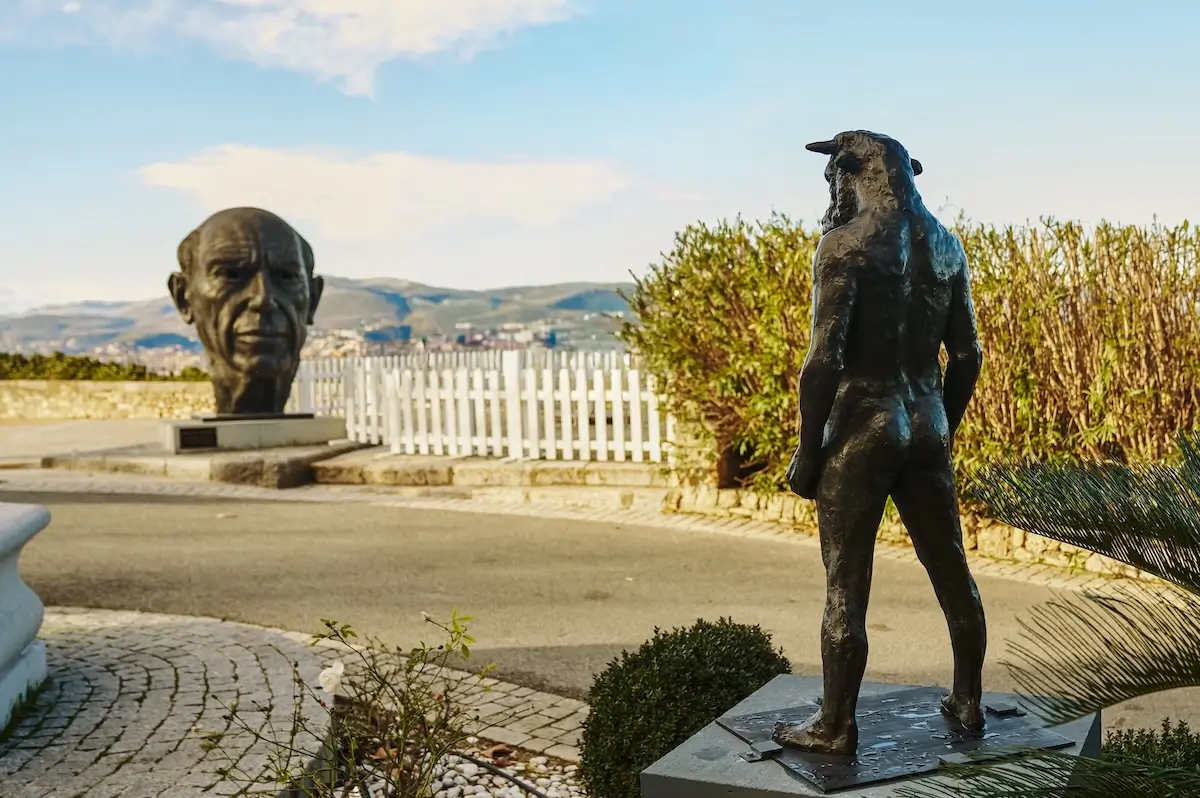
Beth Carter – Standing Minotaur I facing La Tête de Picasso by Gabriël Sterk – Mougins Monumental 2026, photo credit Stuart Mitchell
But the real myths are simpler: that this place is only for the rich and famous, that it is a museum rather than a home. Neither is true. The truth is far more interesting. Here, a retired teacher like me can debate a recipe with a famous chef, or a painter can live here for decades without anyone outside the village knowing his name, but then their name is suddenly plastered on the outside of a museum. And most importantly, here a family can mark three generations of birthdays in the same apartment above the same shop. That’s how we live. Unpretentiously.
People sometimes assume Mougins is all about its past. What about its cultural life today?
It is actually extremely vibrant, given how small a town we are! Come to our performing arts centre, Scène 55, on any given day and see for yourself! We also have the internationally renowned Rosella Hightower school that has been training dancers from all over the world on this campus for over sixty years. You see them around the village, buying bread like the rest of us, and the next night they dance The Nutcracker!
And since 2024, we have the FAMM, the Female Artists of Mougins Museum, which feels long overdue. You may not know this but this museum owes its existence to a man: it was built by the British philanthropist and art collector Christian Levett to exhibit a rotation of his collection of more than 500 artworks created by women artists.
We also have whimsical artisans like Le Doigt, which specialises in the customisation of sneakers, and our association Planet’Creations where various artists and creators share a boutique and exhibit together.
So, our past is real, but it is not all we have. We live in the here and now, and keep an eye on tomorrow. Mougins has always been like that.
How does Mougins change after the tourist season?
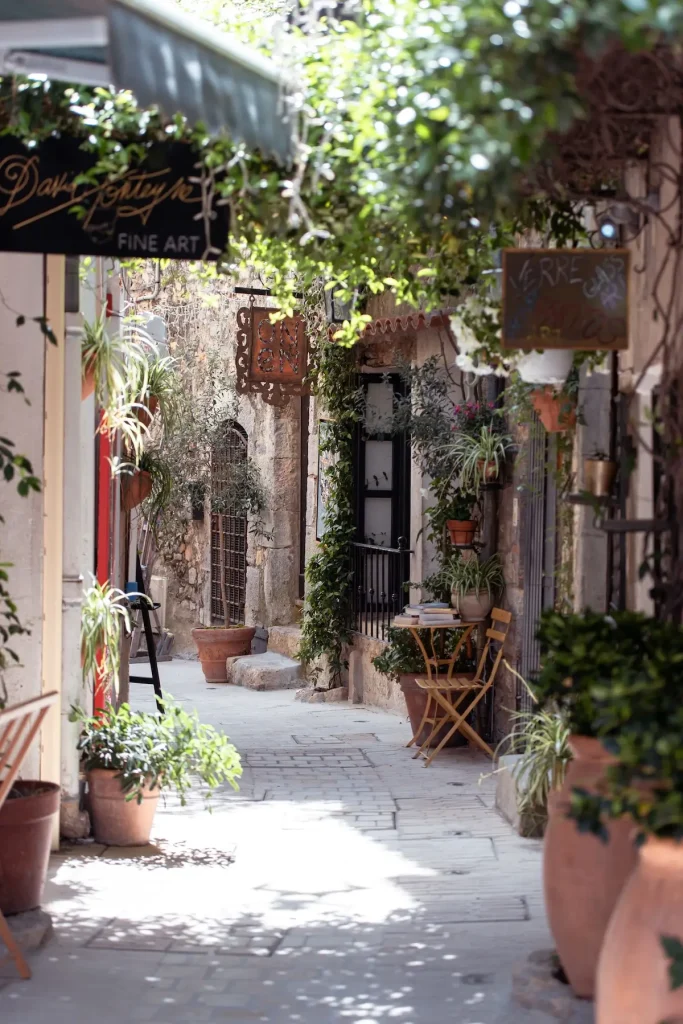
Rue des Orfevres in the village – © Jeremy Guido Mougins tourisme
After the end of summer, when the tourists leave and everything changes back to its natural rhythm, you can walk from one end to the other and hear nothing but your own footsteps and the typical noises of daily life. We love having tourists, but sometimes it’s also nice to have our place to ourselves again. But we are not a sleepy little backwater that goes into hibernation until next spring. There really is a lot going on all year long – it just gets calmer and more in tune with village life.
And finally: After a lifetime here, what does Mougins actually mean to you?
That is the kind of question you ask someone when you think there is a simple answer. There isn’t.
I was not born here but in Le Cannet. That’s 11 km (7 miles) from here but a different world altogether, as all small Riviera towns have their own identity. I came here after I had met my girl, Lucile, and we got married and started a family. It was cheaper up here back then.
Sure, the sea was no longer a bicycle ride away. But what I can say is that I have never needed to look for somewhere else. That might sound like a small thing, but it isn’t. Most people spend a large part of their lives looking: for the right city, the right house, or the right version of somewhere that feels like home. I was given that early, without asking for it, and I understood fairly early on that I’d been lucky. Not fortunate in the way of wealth or circumstance, but lucky in the way of knowing where I am at home.
Living someplace for over forty years, you think a great deal about how places get described and what gets left out. Mougins has been described a thousand times, mostly by people who came for a season and thought they’d understood it. What they saw was real enough, the beauty, the light, the food, all of it, but they saw it the way you see a painting in a gallery: correctly and academically, at a distance.
Courtesy Office de Tourisme de Mougins
But I will tell you something: being a language teacher who sees a lot of foreigners come and go, or come and stay, gives you a particular view of what belonging means. You need to learn to communicate in someone else’s language, on someone else’s terms. That goes both ways. And this town, maybe more so than most others, doesn’t ask for your passport or your nationality, it just asks whether you love it. And if you do, it welcomes you with open arms.
Picasso was not French. The Guinnesses were Irish. Half the artists who gave this place its reputation came from somewhere else entirely and arrived, as outsiders always do, slightly uncertain of their welcome. They needn’t have worried. The town has a long habit of taking people in without making a ceremony of it – no formal welcome and no particular fuss, just a gradual incorporation into daily life until one day you realise you are part of the furniture.
Now it’s the Americans. They come for the light and the food, as people always have, and the energy and enthusiasm which they bring genuine and not unwelcome. Some will stay. Some will move on. Such is life. But they all colour the town in their own ways.
To be from here is something else entirely. I know that the mistral behaves differently on the eastern side of the village, or the village politics where one family has not spoken to another family since a boundary dispute in 1987. And I know the stand in the market where the good tomatoes haven’t been picked over by nine in the morning. None of that makes it into the brochures, but that is what a small place like ours actually is, underneath all its descriptions.
So what does Mougins mean to me? It means I know where I am, where I belong, and where to queue. And that it is my job to preserve this special place for the next generation, just like the people that came before me, did for me.
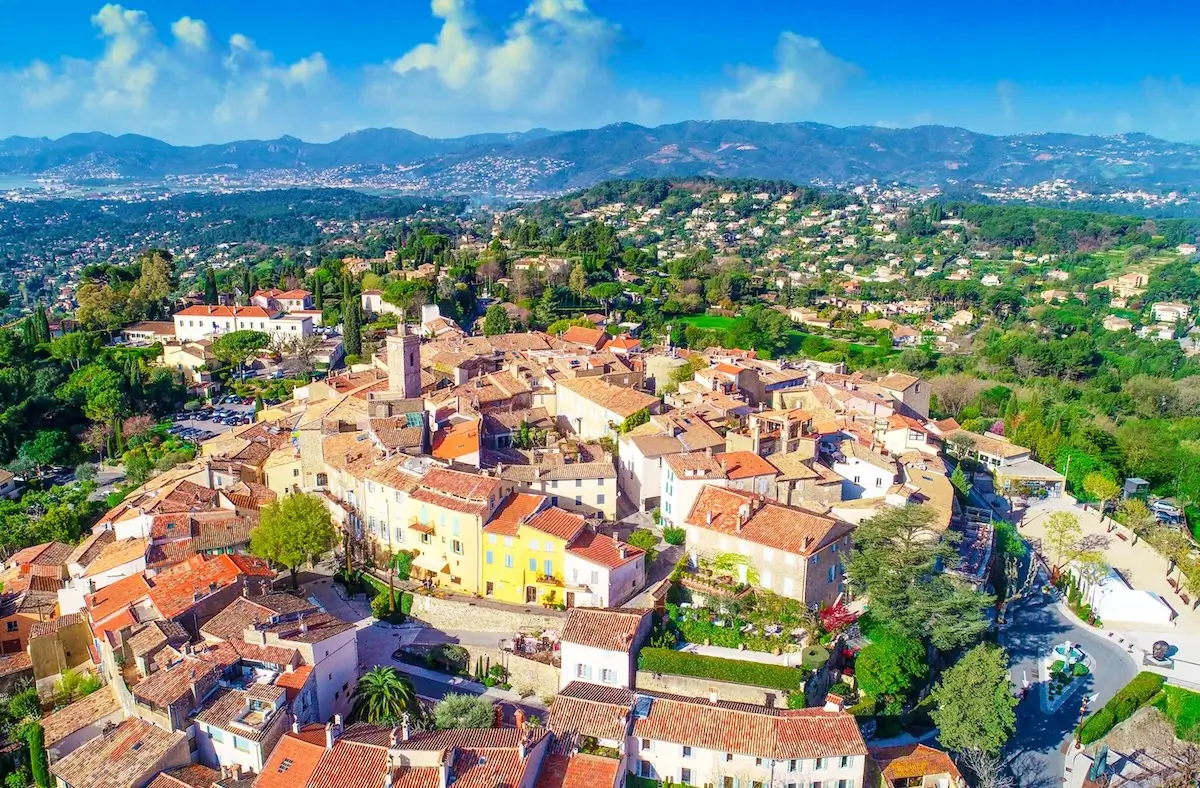
Photo © Ville de Mougins
Like many Riviera villages, Mougins risks being reduced to a brand: light, luxury, and legacy. But it resists the easy labels. Beneath the postcard image and the roll call of famous names is a place with profound substance. Alain’s account is a reminder that the real story of any place is not written by its most famous residents, but by the people who care about their community. And that is why you might want to trust him over any glossy tourist guidebook.

VENUE DETAILS
Office de Tourisme de Mougins
55, Avenue Jean-Charles Mallet
06250 Mougins
Tel: +33 (0) 4 92 92 14 00
Email: tourisme@villedemougins.com
PHOTO CREDITS
- Lead image © Ville de Mougins
- All other photos and video as credited
Advertisement








Leave a comment